


Hydraulic Compression Molding Presses for Rubber Parts Production
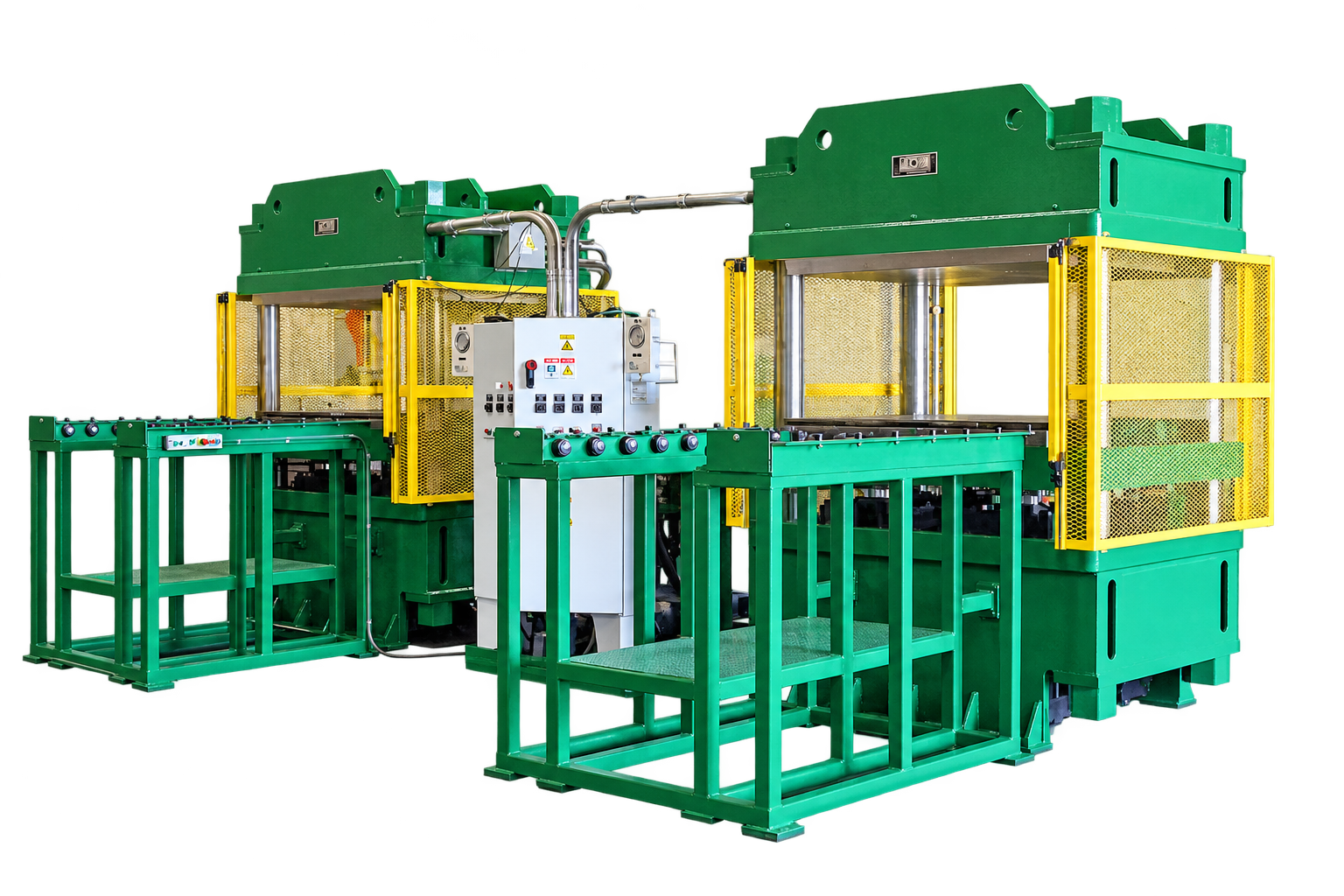
West Coast Rubber Machinery supplies hydraulic compression molding presses for rubber parts manufacturing. Available new or rebuilt, these presses are configured to your tonnage, platen size, heating method, and control requirements. WCRM also refurbishes existing compressio


Pressure, Heat, and a Repeatable Cycle
A hydraulic compression molding press closes a mold containing a rubber preform under controlled pressure and temperature, causing the compound to flow, fill the cavity, and cure. The quality of the finished part depends on how consistently the press delivers pressure, maintains temperature uniformity across the platen surface, and controls the cycle from close through cure and open.

Uniform Pressure Distribution
Press frames designed to minimize deflection under full load, supporting consistent cavity pressure across the full platen area.
Heated Platens
Electric, hot oil, or hot water heating systems with temperature controls to maintain uniform platen surface temperature throughout the cure cycle.
PLC Cycle Control
Programmable logic controllers for precise management of close speed, pressure ramp, cure time, and open sequence—repeatable batch to batch.
Bump Cycling
Optional pre-cure bump sequences to help release air from the mold cavity before full pressure is applied.
Configured to Your Application
Every compression press we supply is configured to the requirements of the application rather than supplied as a fixed catalog product.
- Tonnage: Hydraulic force capacity matched to your mold size, compound type, and part geometry.
- Platen Size: Working area sized for your tooling—from small single-cavity molds to large multi-cavity production tooling.
- Heating Method: Electric, hot oil, or hot water heating depending on your temperature range, cycle time, and facility infrastructure.
- Temperature Range: Standard rubber molding temperatures to high-temperature applications for silicone and specialty compounds.
- Stroke & Daylight: Ram travel and open daylight configured for your tooling height and loading/unloading workflow.
- New, Rebuilt, or Refurbished: Available as new builds, as completely rebuilt units to updated specifications, or as refurbished presses for budget-sensitive applications.


What Compression Molding Presses Are Used For
Hydraulic compression molding is one of the most widely used processes in rubber parts manufacturing. WCRM’s presses are found across a broad range of rubber production environments
Automotive Rubber Parts

Gaskets, seals, grommets, bushings, vibration dampeners, and molded interior components.
Industrial Seals & Gaskets

Custom and standard sealing components for fluid control, piping, and mechanical systems.
Aerospace & Defense

Precision rubber components where dimensional accuracy and material traceability are required.
Medical Rubber

Stoppers, closures, molded components, and other regulated rubber parts.
Consumer & General Manufacturing

Footwear soles, appliance components, and rubber parts for consumer products.
Engineering FAQ
Do you supply new compression presses or only rebuilt units?
Both. We can supply new compression molding presses configured to your specifications, as well as completely rebuilt or refurbished units. The right choice depends on your tonnage requirements, platen size, and budget.
What heating methods are available?
We configure presses with electric, hot oil, or hot water heated platens depending on the temperature range required, the cycle characteristics of the application, and the heating infrastructure available at your facility.
Can you refurbish our existing compression press?
Yes. WCRM refurbishes and rebuilds compression molding presses, including hydraulic system overhauls, platen replacement, control system updates, and safety upgrades. Contact us to discuss your machine.
What information do I need to provide for a quote?
Helpful starting information includes required tonnage, platen size, daylight, heating method and temperature range, any specific control requirements, and whether you are looking for a new press, a rebuilt unit, or a refurbishment of existing equipment.


Ready to Discuss Your Press Requirements?
Tell us your tonnage, platen size, and application and we will recommend the right press configuration for your production needs.